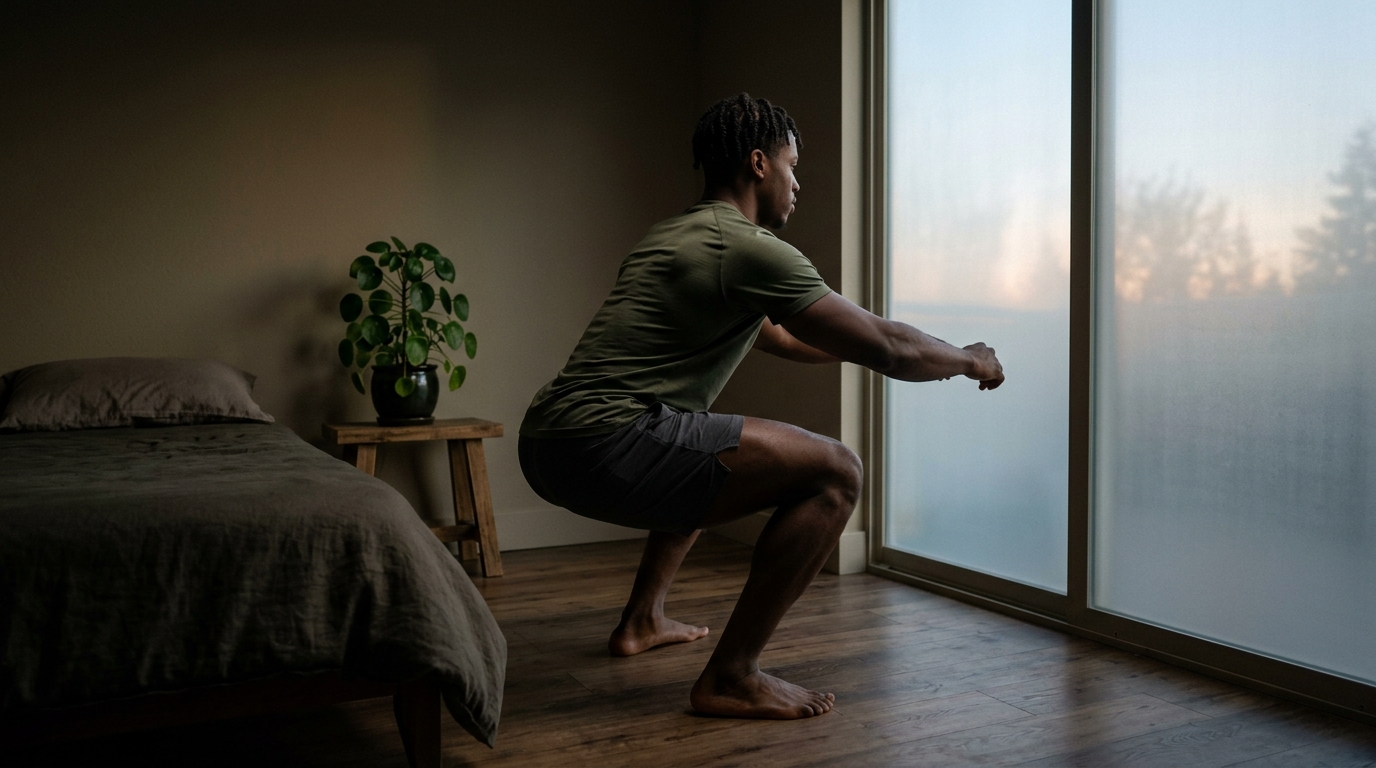

There’s a familiar distance that settles in when we find ourselves observing, rather than inhabiting, our own bodies. It’s that slight lift, a subtle removal, as if watching a scene unfold from a few steps back. The way we might monitor our posture in a mirror, or check for a certain expression during a conversation. In moments of intimacy, this kind of spectating can become a quiet, persistent hum – a part of us mentally taking notes on performance, on whether we’re meeting an unspoken standard, or even just on how our body looks in a particular light. This vigilance often tightens the jaw, quickens the breath, and pulls attention away from the felt experience of skin against skin, or the shifting pressure of a limb. But what happens when that external gaze softens, when the focus drifts back inward, anchoring itself to the temperature of a touch, the subtle hum of vibration, or the slow, involuntary release of an exhale?
When we drop that observation, that inner critic or inner stage manager, something fundamental shifts. The noise of expectation quietens. The body, no longer performing for an imagined audience, can settle into its own rhythm. This isn’t about ignoring external cues entirely, but rather about allowing them to register without becoming the primary lens through which we experience pleasure. It’s about feeling the internal landscape first: the quickening pulse, the deep draw of breath, the slow unfurling of muscle tension. And this recalibration of attention, this shedding of the observer role, is often the first, most crucial step in addressing any perceived “dysfunction” in our sexual lives, particularly when it comes to the complex interplay of blood flow, nervous system states, and responsiveness that underpins what is commonly called erectile dysfunction. And here’s where the conversation often narrows incorrectly, focusing almost exclusively on a penis and its ability to harden, when in truth, the dynamics of arousal and erection, or their absence, are far more broadly distributed across all kinds of bodies.
Beyond the Rigid Definition
The phrase “erectile dysfunction” immediately conjures a very specific image: a penis failing to achieve or maintain firmness for penetrative sex. This narrow framing is both medically accurate for that specific anatomy and yet, culturally, deeply incomplete. It places the entire burden of “erection” – and by extension, “functionality” and “success” – onto one type of body and one type of sexual act. But if we widen our lens to the underlying physiological processes, we begin to see that the challenges associated with erectile dysfunction are not exclusive to those with penises. The core mechanisms involve blood flow, nerve signals, and the relaxation of smooth muscle tissue, all orchestrated by the intricate balance of our autonomic nervous system – specifically, the parasympathetic “rest and digest” state that encourages engorgement, counteracting the sympathetic “fight or flight” response which constricts blood vessels.
Consider the clitoris, for example. Often described as a mini-penis, its internal structure and erectile tissue engorge with blood in much the same way the penis does. When aroused, the clitoris swells, becomes more sensitive, and extends, just as the labia minor and major can also engorge. For individuals with vulvas, there can be a parallel experience of “erectile dysfunction” – a difficulty in achieving sufficient clitoral engorgement, labial swelling, or vaginal lubrication to experience pleasure, especially penetrative pleasure, or even to feel fully “in” their body during sex. This isn’t just about dryness; it’s about the entire cascade of physiological responses that allow for the fullest expression of arousal and responsiveness. It’s about whether the nervous system is truly able to down-regulate enough to allow blood to pool, tissue to soften and expand, and sensations to register with clarity. Yet, we rarely hear about “clitoral erectile dysfunction” or “labial erectile dysfunction” in common discourse, perpetuating a cultural blind spot that isolates and often shames those who experience these very real physiological shifts.
The Inner Workings of Responsiveness
The nervous system plays an undeniable role in our ability to respond sexually. When we are stressed, anxious, or feeling pressured, our sympathetic nervous system kicks into gear. This state, designed to help us flee danger or fight a perceived threat, diverts blood flow away from non-essential functions like digestion and sexual arousal, shunting it towards large muscle groups. In this state, achieving engorgement – whether of a penis, clitoris, or labia – becomes significantly harder. The smooth muscles that line the arteries supplying these tissues remain contracted, limiting blood flow. It’s not a conscious choice, but a deeply ingrained physiological response.
Conversely, true arousal flourishes in a parasympathetic state, where the body feels safe enough to relax, open, and receive. This is when blood vessels dilate, allowing blood to engorge erectile tissues and lubricate vaginal walls. It’s a state fostered by feelings of connection, safety, and a release from pressure. This internal climate is far more influential than any external stimulus in isolation. A touch that feels rushed or demanded, even if intended to be pleasurable, can activate the sympathetic response, effectively closing down the very pathways required for arousal. Conversely, a slow, unhurried presence, a gentle focus on breath and sensation, can invite the nervous system to shift gears, allowing the body to soften and open. Understanding this interplay between stress, safety, and physical response is critical for anyone experiencing difficulty with sexual arousal, regardless of their anatomy. It moves the conversation beyond a purely mechanical problem to one that deeply involves our emotional and physiological landscape.
Keep exploring: what are microdosing protocols for female sexual dysfunction and are they safe? · how to discuss pleasure gaps with your partner without causing offense
Cultivating Somatic Awareness
So, if “erectile dysfunction” is less about a single body part’s failure and more about a systemic inability to achieve a parasympathetic state sufficient for engorgement and responsiveness, what can be done? The shift often begins not with a pill or a procedure, but with a deliberate, gentle cultivation of somatic awareness. This means learning to tune into the subtle signals of the body: the speed of your breath, the tension in your jaw or shoulders, the warmth or coolness of your skin, the subtle quiver of your pelvic floor.
Start small. Before any sexual encounter, or even just during a quiet moment, lie down and place a hand on your belly. Notice the rise and fall of your breath. Can you lengthen your exhale, making it slightly longer than your inhale? This simple act signals safety to your nervous system. Pay attention to the places in your body where you hold tension – your jaw, your shoulders, your hips. Without judgment, simply notice. Can you soften just a millimeter? This isn’t about “fixing” anything, but about building a relationship with your internal landscape. When touch begins, whether alone or with a partner, bring your awareness to the actual sensations: the pressure, the temperature, the texture. Don’t immediately try to interpret or analyze; just feel. If your mind wanders to performance or comparison, gently guide it back to the breath, to the contact, to the felt experience in your body. This practice of returning attention, over and over, slowly rewires the habit of spectating, gradually allowing the body to inhabit its own pleasure without the weight of external judgment or expectation. It’s a gentle invitation for the nervous system to relax its guard, and for blood to flow freely, unimpeded by the subtle constrictions of a mind caught in “doing” rather than simply “being.”
The aim isn’t necessarily a specific outcome, but a deeper integration with the body’s natural rhythms. The measure of success isn’t about achieving a certain firmness or a specific level of lubrication, but about the softening of the shoulders, the deepening of the breath, the unclenching of the jaw.