
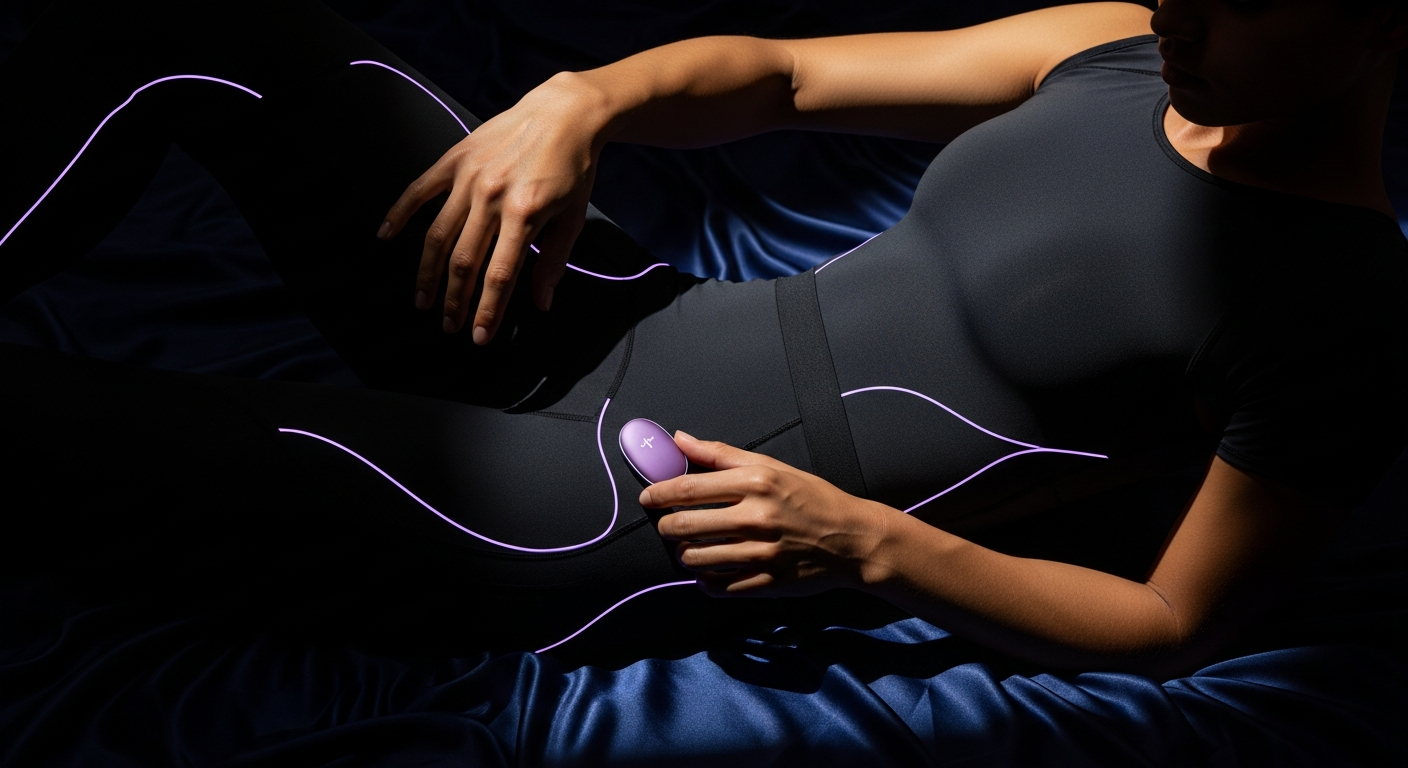
Wearable technology in 2026 offers diverse avenues for sexual wellness enhancement, ranging from biometric tracking for mood and hormone cycle insights to app-controlled vibrators and haptic feedback devices. These tools can help users better understand their body’s responses, explore new forms of pleasure, and facilitate improved communication with partners, all supported by data without claiming to replace human connection.
Beyond Steps: What “Sexual Wellness” Even Means in the Age of Tech
Let’s be clear: sexual wellness isn’t just about avoiding STIs or having frequent orgasms. While those are definitely part of the picture, it’s a much broader, more holistic concept. The World Health Organization defines sexual health as “a state of physical, emotional, mental and social well-being in relation to sexuality.” That’s a mouthful, but the key takeaway is well-being. It means feeling good about your sexuality, understanding your desires, communicating effectively, and experiencing pleasure in ways that feel right for you.
So, when we talk about using wearable tech to enhance sexual wellness, we’re not just looking at devices that promise bigger O’s (though some certainly aim for that!). We’re exploring tools that can help you understand your body’s rhythms, manage stress that impacts libido, discover new forms of pleasure, and even foster deeper intimacy with yourself and your partners. It’s about empowerment, really.
Understanding Your Body’s Internal Rhythm: Biometric Feedback and Hormone Tracking
One of the most powerful — and often overlooked — applications of wearable tech for sexual wellness lies in its ability to provide insight into your physiological state. Think about it: our bodies are complex systems, and things like stress, sleep deprivation, and hormonal fluctuations can significantly impact libido, arousal, and overall sexual responsiveness.
Sleep, Stress, and Sex Drive: The Interconnected Web
Your fancy smartwatch isn’t just telling you you got six hours of sleep; it’s also tracking your heart rate variability (HRV), skin temperature, and perhaps even blood oxygen levels. These metrics, when viewed over time, can offer clues about your body’s stress response and recovery. A consistently low HRV, for instance, might indicate chronic stress, which is a notorious libido killer. Understanding these patterns allows you to make lifestyle adjustments – maybe you need more mindfulness, better sleep hygiene, or a different exercise routine – which, in turn, can positively impact your sexual energy.
The data here is correlational, not necessarily causal – wearing a device won’t magically give you a higher sex drive. But it can highlight areas where your well-being (and therefore your sexual well-being) might be suffering. It’s like having a little personal detective for your body, helping you connect the dots between how you feel generally and how you feel sexually.
Cycle Syncing and Hormonal Insights
For those with uteruses and menstrual cycles, wearable tech is becoming incredibly sophisticated in tracking fertility windows and hormone-related shifts. Devices that monitor basal body temperature (BBT) are now more accurate and less intrusive than traditional thermometers. Some advanced rings and patches integrate with apps that predict ovulation with impressive precision.
This isn’t just about contraception or conception, though it’s certainly useful for both. Understanding where you are in your cycle can reveal patterns in your libido, energy levels, and even emotional responses. Many people report feeling more desirous or adventurous during certain phases. Armed with this knowledge, you can “cycle sync” your sexual activities, scheduling intimate moments when your body is naturally more receptive, or simply understanding why you might feel less “in the mood” at other times. It’s about working with your body, not against it.
Of course, the evidence linking specific hormonal fluctuations directly to sexual pleasure levels is still evolving and often based on self-reported experiences, which are valuable but aren’t double-blind clinical trials. What we do know is that tracking these patterns helps many individuals feel more in tune with their bodies, and that sense of embodied awareness is a powerful component of sexual wellness.
Direct Pleasure Enhancement: Smart Sex Toys and Haptic Devices
Now, let’s talk about the more direct applications of wearable tech for pleasure. This is where things get really exciting, and, frankly, a bit futuristic. Forget your grandmother’s vibrator (unless she’s rocking a remote-controlled one, in which case, go Nana!).
App-Controlled Intimate Devices
The market for app-controlled sex toys has exploded. These devices, often worn internally or externally, connect to your smartphone via Bluetooth, allowing for customized vibration patterns, intensity levels, and even long-distance control. This opens up a world of possibilities for solo exploration, partner play, and even connecting with a remote lover.
Imagine: you’re on a business trip, and your partner, thousands of miles away, can control your wearable vibrator from their phone, creating a shared intimate experience despite the distance. Or perhaps you’re using an app to discover new sensation patterns you never knew you enjoyed. The ability to fine-tune your pleasure, save favorite settings, and even download new “programs” of sensation transforms the experience from a simple buzz to a personalized, evolving journey of discovery.
Haptic Feedback and Biofeedback for Arousal
Beyond traditional vibrations, some cutting-edge devices are exploring haptic feedback – subtle tactile sensations – and even biofeedback to enhance arousal. Imagine a wearable that gently stimulates nerve endings in a non-obvious way, creating a background hum of sensual awareness. Or devices that respond to your body’s own arousal signals, perhaps increasing intensity as your heart rate rises, creating a fascinating feedback loop. This area is still nascent, but the potential for truly personalized and responsive pleasure is immense.
It’s worth noting that while the technology can be incredibly stimulating, sometimes the best pleasure comes from low-tech solutions, or even no-tech ones. Wearable tech is a tool, not a replacement for human touch or genuine connection. But for those who want to explore new frontiers of sensation, it’s undeniably powerful.
The Social and Relational Side: Wearables for Connection and Communication
Sexual wellness isn’t solely an individual pursuit; it often involves partners. Wearable tech is starting to play an intriguing role in fostering connection and improving communication, albeit in subtle ways.
Shared Exploration and Play
The rise of app-controlled toys means partners can explore together, even when physically apart. It’s not just about remote control; it’s about shared discovery. Imagine using a paired set of devices where both partners can feel and respond to the same patterns, or where one partner creates a “playlist” of sensations for the other. This can be a playful, exciting way to maintain intimacy and inject novelty into a long-term relationship. It can also be a fantastic way for couples to talk about pleasure – what feels good, what doesn’t, what they’re curious about – without the pressure of direct physical interaction.
Bridging the Communication Gap (Subtly, of course)
This is a slightly more contrarian point, perhaps, but sometimes technology can help us communicate things we struggle to put into words. While direct verbal communication is always king in relationships, for some, a shared technological experience can be a gateway. For example, playfully sending a “vibe” to your partner’s wearable device across the room during a dull party might be a cheeky way to signal desire without saying a word. This isn’t about replacing conversation, but adding another layer to the intricate dance of intimacy. It’s an unspoken language, well, sort of. A modern love language, perhaps.
The caveat here, and it’s a big one, is that technology should facilitate communication, not substitute it. If you’re relying on a gadget to convey all your desires, you’re missing out on the deeper connection that comes from open, honest verbal exchange. Use the tech to spark the conversation, not end it.
The Future is Wearable, but the Power is Still Yours
As we look ahead, the integration of wearable tech into our sexual lives is only going to become more seamless and sophisticated. We’ll likely see more personalized algorithms that learn our preferences, more discreet designs, and even greater integration with other aspects of our digital lives (though hopefully with robust privacy protections!).
However, it’s crucial to remember that technology is a tool. It can amplify, illuminate, and connect, but it doesn’t define our sexuality. The true power lies not in the gadget itself, but in how we choose to use it to explore our bodies, understand our desires, communicate with others, and ultimately, enhance our overall well-being. So, what will you discover about yourself when you put on the future of pleasure?