
The most common error I observe, particularly among those new to BDSM, is the direct imitation of a scene without building the necessary architecture underneath. They witness a restraint sequence on a screen, or a specific verbal cue, and attempt to replicate it. The physical act is visible. The invisible framework – the negotiation, the limits, the safewords, the established trust – is not. This omission is not merely a misstep; it is a fundamental miscalculation of gravity. The collapse is inevitable.
Elara adjusted the strap of her bag, the leather cool against her wrist. The Berlin air, even in late spring, carried a crisp edge. She stood outside the Salon Obscura, a nondescript door tucked between a laundromat and a Turkish bakery. No neon. Just a discreet brass plaque. She had memorized the address from the handwritten note, folded twice in her pocket. Not an email, not a text. Paper. A deliberate choice.
Inside, the light was muted, rich with the scent of beeswax and old wood. Not a club. More like a private study, or a carefully curated antique shop. Dark velvet, hushed corners. A man stood by a tall, leaded-glass window, his back to her. Tall, lean. The kind of posture that suggested both discipline and an underlying tension. He turned when he heard her.
“Elara.” His voice was low, resonant. A slight accent she couldn’t immediately place. German, perhaps, but with a deeper cadence.
“Marius,” she replied, her own voice steady. No hesitation. She had rehearsed this. Not the words, but the internal calibration.
He gestured to a pair of chairs by a low, polished table. On it, a single porcelain teacup, steam rising. “Tea?”
“Black, no sugar. Thank you.” She sat, crossing her legs. Her skirt, a tailored charcoal wool, felt appropriate. Not a costume.
He poured from a small silver pot. His hands were long, capable. “The note,” he said, setting the cup before her. “It intrigued me. Specificity. Clarity.”
“Clarity is essential,” Elara countered. “Ambiguity serves no one, least of all in these arrangements.”
He inclined his head. “Indeed. You wrote: I seek an architecture of restraint, not merely its appearance. This is… precise.”
“I’ve observed the distinction. Many confuse a lock with a boundary. A lock implies a violation is possible. A boundary, properly understood, is an agreement not to approach. The lock then becomes an aesthetic choice, not a necessity.”
Marius watched her over the rim of his own cup. “And you believe the appearance of restraint, without the underlying architecture, is… what?”
“Fragile. Dangerous. A performance without a script, a fall without a net. It’s an act of ego, not connection.”
A faint smile touched his lips. “I agree. So, what architecture do you envision?”
She met his gaze directly. “Clear limits. Negotiated safewords, not just a casual red light, but a tiered system. Yellow for pause, re-evaluate. Red for immediate cessation. A pre-established aftercare protocol. Not a conversation after the fact, but a commitment before.”
“And the nature of the restraint?”
“Physical, yes. But the primary architecture is cognitive. The surrender is in the mind, the body follows. I am interested in the dissolution of control, but only when that dissolution is itself a controlled act. A paradox, perhaps, but a necessary one.”
He nodded slowly. “A paradox that defines the space. You understand its precise geometry.” He rose, walked to a bookshelf, and ran a finger along the spines of old volumes. “Tell me about the handwritten note. Why not an email? Or a phone call?”
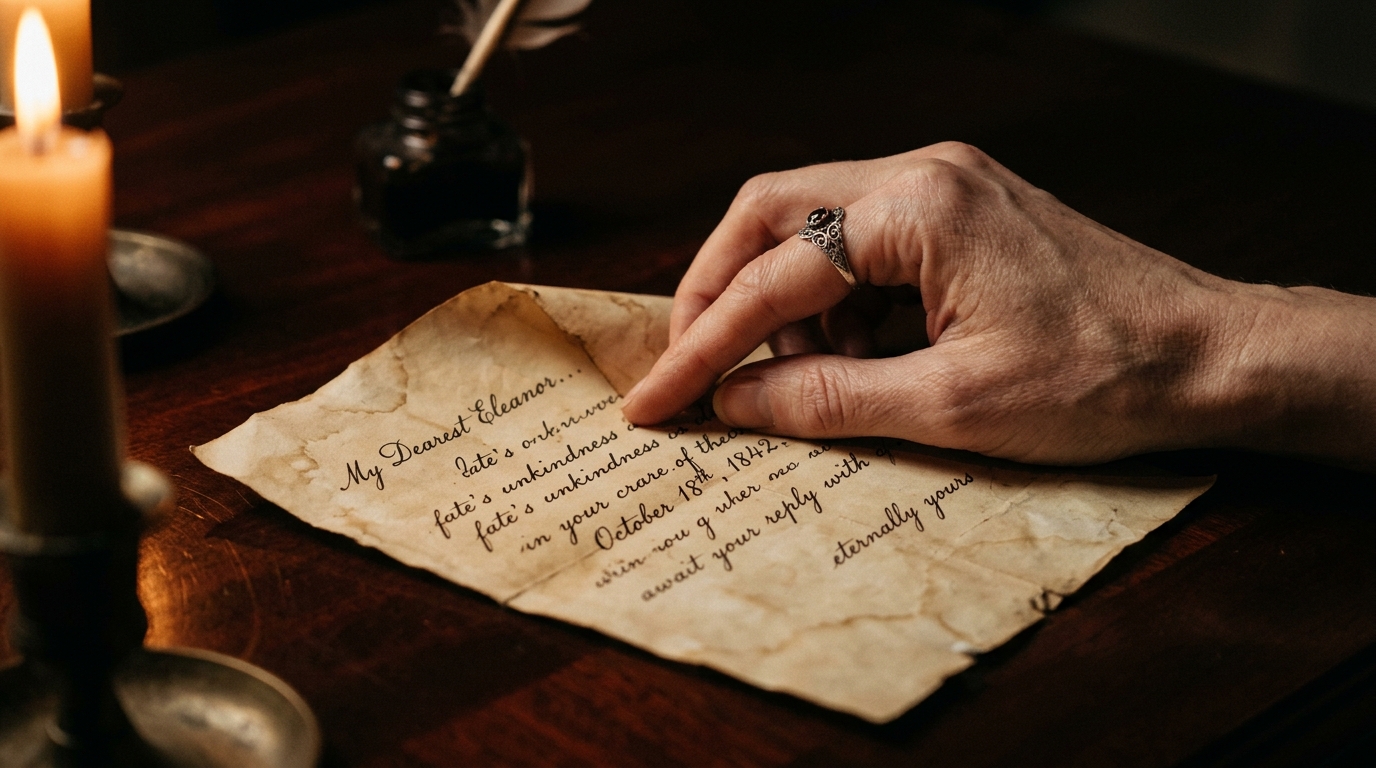
“An email is easily deleted, easily ignored. A phone call is ephemeral. A handwritten note demands presence. It requires the physical act of writing, the choice of paper, the ink. It implies intention, care. It also creates a physical artifact. Something that can be held, returned to. A reminder of the initial agreement, if needed.”
He picked a slender book from the shelf, bound in worn leather. “A physical anchor,” he mused. “I appreciate that. Most people want to erase the process, to jump directly to the experience. They forget the foundation is the experience itself.”
He turned, the book in his hand. “You speak of boundaries. Tell me your hard limits. The things that are non-negotiable.”
Elara took a slow breath, grounding herself. “No blood. No permanent marks. No public display without explicit, separate consent. And crucially, no ambiguity in the safeword system. If ‘yellow’ is spoken, it means ‘yellow’. No interpretation. No second-guessing.”
“And your desires?” he prompted. “Beyond the architecture, what is the structure intended to hold?”
“The quiet surrender,” she said, her voice dropping slightly. “The relief of not having to decide. The freedom found in relinquishing control to someone who understands the weight of that trust. The deep, physical release that comes when the mind is finally, truly quieted by an external will.”
He came back to the table, but did not sit. He placed the book on the polished wood. “This,” he said, tapping the cover gently. “Is a collection of poems. Not relevant to our discussion, perhaps. But it is a physical object. A piece of the world. Like the note. Like the space we inhabit now.”
His gaze was steady, discerning. “The architecture is sound, Elara. We can build on this.”
Hours later, the room was darker, lit only by a few carefully placed lamps. Elara lay on a thick wool blanket, her wrists bound by soft, wide leather cuffs to a heavy, ornate bed frame. The bindings were snug, secure, but not painful. Her ankles were free. A deliberate choice. Not total incapacitation. The power was in the choice to remain.
Marius sat on the edge of the bed, watch
More fiction on Sexarium: The Observatory’s Gaze: a stargazing encounter, seen and unseen · The Sommelier’s Cellar: vintage desire, an intoxicating encounter · The Vineyard at Dusk: shared wine, secret glances ing her. His touch had been precise, deliberate. Not hurried. The rope work had been careful, his hands moving with the economy of someone who understood physics, not just aesthetics.
“Comfortable?” he asked, his voice a low hum against the quiet.
“Yes,” she breathed. Her heart beat a slow, heavy rhythm against her ribs. Her mind, usually a whirl of calculations and considerations, felt strangely still.
He reached out, his fingers tracing the line of her collarbone. The touch was feather-light, almost imperceptible, yet it carried a current. “The quiet,” he murmured. “Is it there?”
“It is,” she confirmed. The sensation was not one of being trapped, but of being held. Supported. The invisible architecture hummed around them, solid and true. Every boundary set, every limit understood, every safeword confirmed. This allowed the suspension. This allowed the breath.
He leaned closer, his scent clean, faintly metallic. “Good,” he whispered, his lips brushing her ear. “Because now, we begin.” His hand, warm and firm, settled on her hip.
The silence after was not empty. It was full, a resonant hum. Elara lay unmoving, the bindings still in place. Marius had brought her water, holding the glass to her lips. The taste was cool, grounding. He had covered her with a thick cashmere throw.
He sat on the floor beside the bed, one hand resting lightly on her arm. Not a touch of possession, but of presence. His gaze was distant, thoughtful.
“Are you back?” he asked softly, after a long time.
“Yes,” she replied, her voice a little rough. “Fully.” The mental recalibration was almost complete. The boundaries, the control she had willingly surrendered, were slowly returning to her. Not seized back, but gently re-inhabited.
“No echoes?” he pressed.
“Only the hum,” she confirmed. The residual vibration of release, not anxiety.
He nodded, a slow, deliberate movement. “Good. The transfer back is as important as the initial surrender. The system must be balanced.” He rose then, and began to untie the knots. Each movement was methodical, unhurried. The leather cuffs fell away.
Elara stretched her wrists, feeling the returning circulation, the faint imprint of the leather. The architecture had held. The surrender had been complete. The return was equally so. She understood, with a renewed clarity, that the safety was not a soft cushion, but a precisely engineered framework, allowing for a deliberate, controlled fall.