The architecture of sustained desire, like that of certain French gardens, often relies on a meticulous arrangement of distance, a deliberate withholding of the vista, a series of intimate enclosures that only hint at the grand design. To lay bare every path, every bloom, every hidden alcove at once, is to rob the experience of its very pulse: the anticipation of discovery.
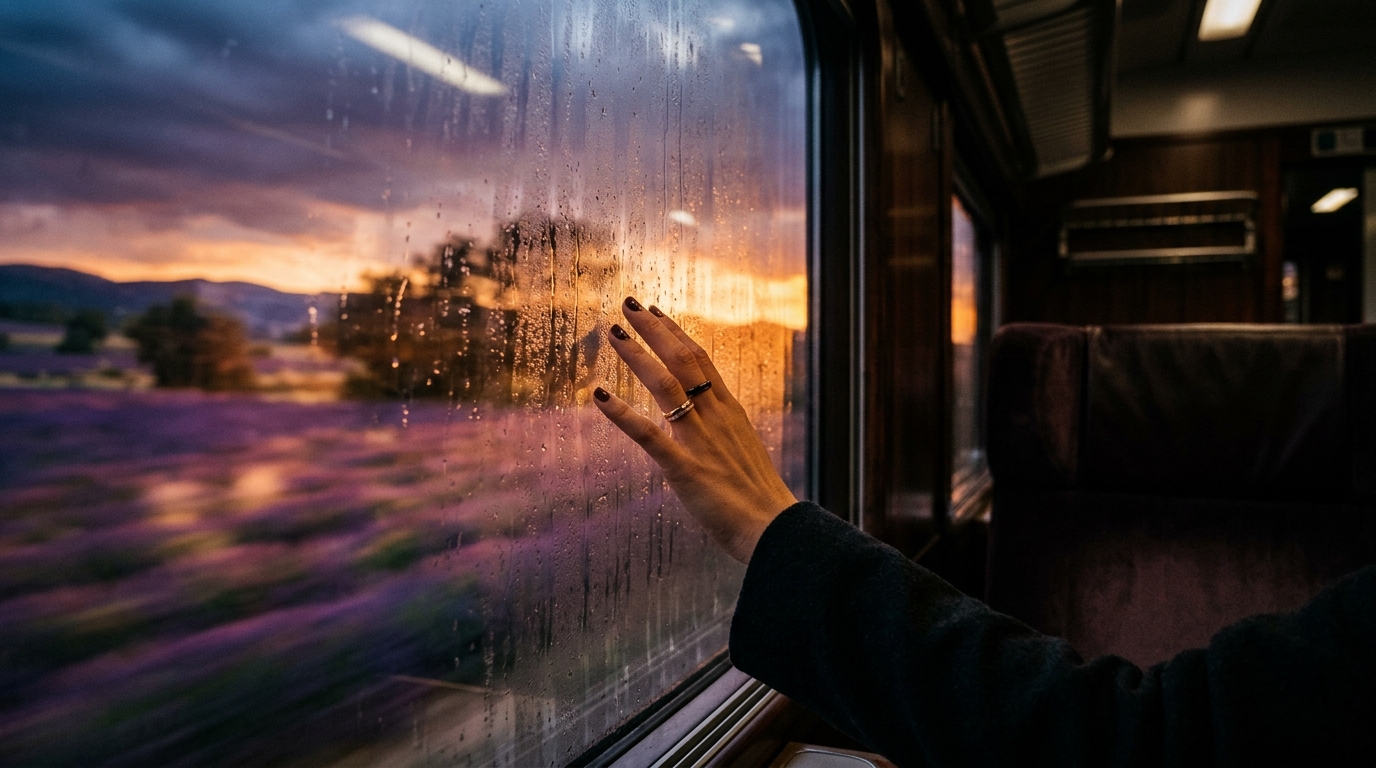
The high-speed rail, a silver dart through the sun-drenched fields of Provence, offered a peculiar kind of intimacy. Not the intimacy of shared confession, but of proximity held in suspension. Elara watched the landscape blur – ochre villages, cypress spires, the occasional flash of a sunflower field – through the window. Across the narrow aisle, Laurent was engrossed in a financial newspaper, the rustle of its pages a quiet counterpoint to the train’s hum. They had met by chance, or perhaps by that precise algorithm of fate that sometimes arranges the most inconvenient connections, three days prior at a symposium in Lyon. A shared glance over lukewarm canapés, a brief, sharp exchange about a speaker’s dubious statistics, and then the unexpected invitation: Provence, for a few days? My family has a small place near Gordes. You should see it.
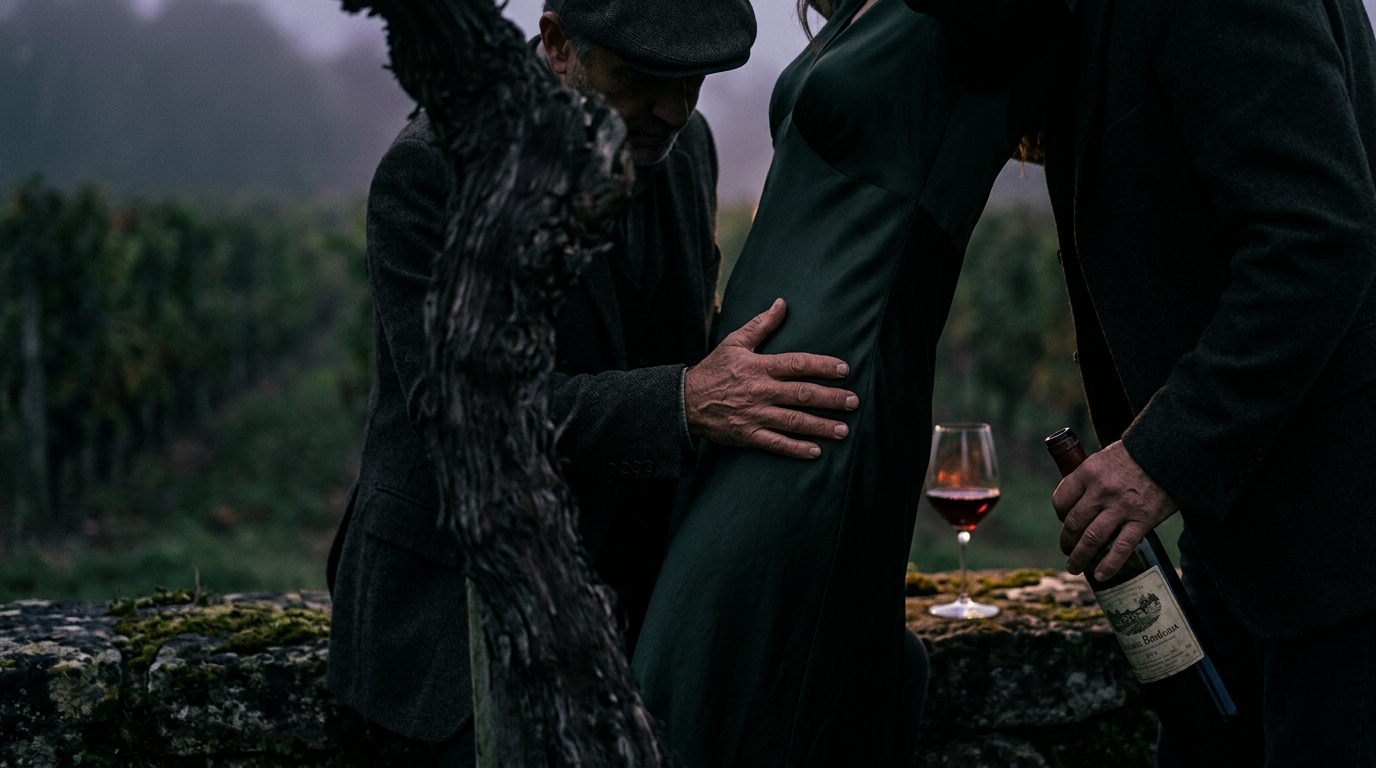
She had. And now, she was returning to Paris, leaving him to linger in the soft, sun-warmed stone of his ancestral home. The air conditioning in the carriage was a cool whisper against her bare arm, the unlined silk of her dress a second skin. Her carry-on rested on the rack above, containing only a few carefully chosen items: a book of poetry, a vial of jasmine oil, and the lingering scent of Laurent’s vetiver cologne on the linen shirt she had packed without thinking.
Laurent folded the newspaper with a decisive snap, his gaze lifting to meet hers. His eyes, the color of warm cognac, held a glint of something unreadable, a quiet amusement. “Already planning your escape, chérie?” he asked, his voice low, a trace of an accent she couldn’t quite place, but which softened the edges of his French.
Elara smiled, a slow unfolding. “Merely observing the scenery. A different kind of escape, perhaps.” She thought of the mornings in Gordes: the scent of wild thyme, the way the light fell through the ancient olive trees, the cold white wine Laurent poured at noon, the way his fingers, long and capable, traced the rim of the glass. And then, the afternoons. The sun hot on her skin as they walked the cobbled paths, the shared silence, the sudden, fierce pull of his hand in hers.
“And what does the scenery tell you?” he probed, leaning forward slightly, his elbow resting on his knee. The subtle shift in his posture seemed to shrink the already confined space between them. She noticed the fine tailoring of his suit jacket, the way the dark fabric stretched across his shoulders.
“That distance can be its own form of intimacy,” she replied, her gaze drifting back to the window, the fleeting glimpse of a distant vineyard. “It allows the mind to fill in the spaces, to imagine the paths not taken, the words unsaid.”
Laurent chuckled, a low, resonant sound. “Ah, the Cartesian seduction. To think, to imagine, is to desire. You prefer the idea of the vineyard to the soil beneath your feet?”
“Not necessarily. But the soil, once trodden, can lose some of its mystery. The idea, on the other hand, can be endlessly fertile.” She turned back to him, her expression serious. “Isn’t that where the true architecture of desire resides? In the spaces we leave for the other to occupy with their own thoughts, their own longing?”
He studied her for a moment, a silence stretching between them, punctuated only by the rhythmic clatter of the train. It was a comfortable silence, charged with the unspoken things that had transpired in Provence. The memory of his hand on her bare hip, the taste of salt and wine on her tongue, the soft sigh she hadn’t known she was capable of.
“Perhaps,” he conceded, a slight curve to his lips. “Or perhaps, it is merely the art of the delayed gratification. To savor the anticipation, knowing the pleasure will arrive, eventually.” He paused, then added, “Like the best vintage, one does not rush its opening.”
The train pulled into the Gare de Lyon with a sigh of hydraulics. The platform, a controlled chaos of travelers, felt jarring after the quietude of the carriage. Laurent rose, retrieving his small leather bag, then reached for hers. His fingers brushed hers as he handed it down, a brief, electric current.
“So, Paris,” he said, his voice a little lower now, closer. “Will it offer enough distance for your… fertile imagination?”
Elara met his gaze. The station hummed around them, but for a moment, they were in their own bubble, the noise fading. “Paris offers an abundance of distances. Of veiled windows, of hushed coursing through museums, of cafés where one can observe without being observed.” She allowed a hint of a smile to play on her lips. “And yet, sometimes, even the grandest city can feel remarkably small, particularly when one expects a certain knock at a certain hour.”
He returned her smile, a slow, knowing expression that reached his eyes. “Indeed. Some distances are meant to be traversed, n’est-ce pas?” He paused, his gaze dropping to her mouth, then back to her eyes. “But for now, the city awaits. And the imagination, too, must be given its due.”
He gestured towards the exit, allowing her to precede him. As they walked through the throng, the late-afternoon shadow of the station roof stretched long across the polished floorboards. The scent of coffee and exhaust fumes mingled in the air. Elara felt the cool, precise weight of his presence behind her, a subtle warmth at her back. The click of a taxi door latch, the hum of the engine, the familiar rush of Paris traffic. Distance, she mused, was merely a precursor. A delicate framing for the unfolding drama of closeness. And the best dramas, after all, always leave one wanting more.