
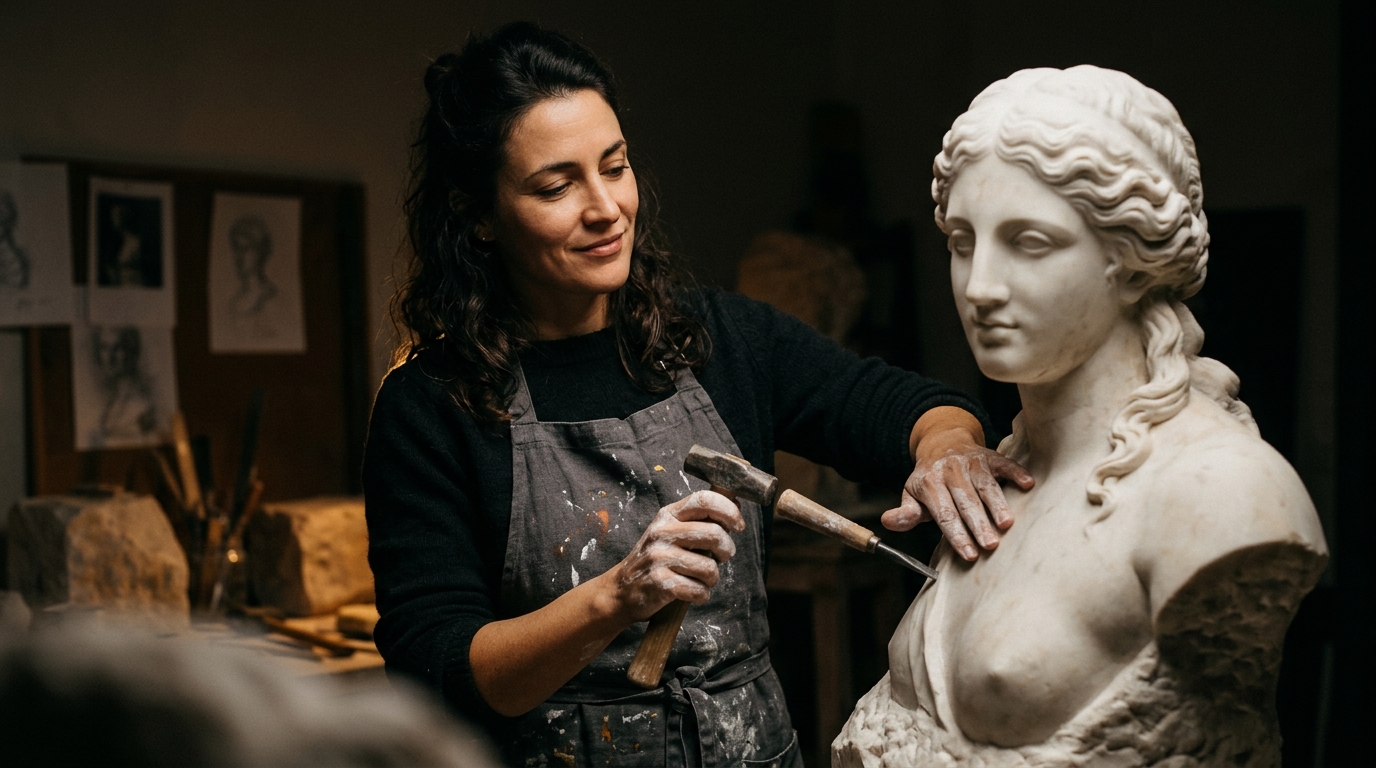
Our understanding of human eroticism owes more to plaster casts and fresco pigments than to anything found in a contemporary magazine. This isn’t to say that modern media is devoid of influence, but rather that the visual language for desire, the very architecture of what we deem beautiful or alluring, was largely codified centuries ago in dimly lit workshops and sun-drenched Italian courtyts.
For a period often associated with religious piety and the strictures of the church, the European Renaissance exhibited an almost brazen fascination with the human form, naked and unadorned, which paradoxically laid the groundwork for how we perceive sensuality even today. The revival of classical ideals, fueled by excavations of ancient Greek and Roman sculptures, didn’t just bring back toga-clad heroes; it ushered in an era where the body, in all its sculpted glory, became a primary vehicle for expressing beauty, power, and, yes, even lust. Before this, the prevailing artistic narratives often depicted the body in a more allegorical or devotional context, shrouded or stylized, rarely celebrated for its intrinsic physicality.
The Body as Canvas
Prior to the Renaissance, depictions of the human form, especially in a state of undress, were largely dictated by theological narratives or moral allegories. Nudity, when it appeared, was often to signify innocence (Adam and Eve before the Fall) or shame (after). The meticulous anatomical studies by artists like Leonardo da Vinci and Michelangelo, while rooted in scientific curiosity, profoundly impacted how the body was rendered in art. They didn’t just sketch bones and muscles; they imbued these forms with a vibrant sense of life, movement, and emotional depth. A sinewy back or a swelling thigh wasn’t merely accurate; it became a conduit for narrative, a focal point for the viewer’s gaze.
Consider Michelangelo’s David: a monumental figure, starkly nude, embodying strength, youth, and an almost defiant beauty. He stands not as a symbol of sin, but as a pinnacle of human potential. This shift, from the body as a site of potential transgression to a canvas for divine artistry, was seismic. It allowed for a more nuanced and, frankly, more sensual appreciation of the human physique. The curves, the tension of muscles, the delicate rendering of skin – these were no longer just details but the essence of the work, inviting an admiring, rather than admonishing, gaze. This detailed, almost reverent approach to anatomical representation established a visual vocabulary that would seep into the collective consciousness, shaping what was considered aesthetically pleasing and, by extension, sexually desirable. It’s a concept that has evolved, of course, but the foundational principles remain, influencing everything from contemporary photography to the aesthetics of physical fitness.
The Invention of the Gaze
One of the most significant, if often unacknowledged, contributions of Renaissance art to our understanding of eroticism was the formalization of “the gaze.” Artists began to construct images where the viewer was implicitly, or explicitly, invited to look, to admire, and even to covet. Take Titian’s “Venus of Urbino,” a reclining nude who looks directly out at the viewer, her hand delicately placed, not in modesty, but in a gesture that subtly draws attention to her own body. This isn’t a passive depiction; it’s an active invitation. The painting is a masterclass in how an artist can manipulate perspective and pose to create a sense of intimacy and engagement, a dynamic that underpins much of what we now consider alluring.
This direct address to the viewer was a radical departure from earlier works where figures were often absorbed in their own world or oriented towards a divine presence. The Renaissance artist, in essence, taught us how to look at the human form with a specific kind of desire, a cultivated appreciation for its aesthetic qualities. It was less about spontaneous attraction and more about a carefully composed visual dialogue. This cultivated gaze, perfected over centuries, still informs our interactions with visual media, from how we interpret fashion photography to how we understand representations of sexuality in film, an evolution further explored in articles like The Shifting Gaze: How Early Cinema Framed Female Pleasure.
Beyond the Ideal
While the Renaissance established many idealized forms – the athletic male, the curvaceous female – it also inadvertently introduced a subtle tension between the aspirational and the attainable. The flawless skin, the perfectly proportioned limbs, the serene expressions; these became the benchmarks against which real bodies were, and still are, often measured. This creation of an “ideal” form, while artistically brilliant, also laid the groundwork for certain anxieties about physical perfection. The bronze muscles of a classical hero, or the pearlescent skin of a painted goddess, were not just artistic achievements but became a kind of visual shorthand for beauty itself. This dynamic continues to play out in various forms, particularly in how cultural values intersect with physical presentation, a phenomenon that sometimes touches upon what is erotic capital theory and how to build sexual confidence in 2026.
It’s a testament to the enduring power of these artistic conventions that even as our understanding of anatomy and sexual expression has broadened considerably, the echoes of these Renaissance ideals persist. They’ve been filtered through countless cultural shifts, technological advancements, and individual interpretations, but the foundational visual grammar – the emphasis on proportion, musculature, and a certain poised allure – remains remarkably resilient. For a deep dive into the historical origins of these ideals, the Wikipedia entry on Renaissance art offers a comprehensive overview of its major movements and figures.
The meticulous rendering of flesh and form during the Renaissance didn’t just give us beautiful art; it gave us a new lexicon for desire, an enduring visual language that continues to shape our private imaginations and public presentations. The next time you find yourself admiring a sculpted physique or a captivating portrait, remember the artists who, with brush and chisel, first taught us how to see. And how to want.
Frequently Asked Questions
How did Renaissance artists' anatomical studies influence the depiction of eroticism?
Renaissance artists like Leonardo da Vinci and Michelangelo conducted meticulous anatomical studies, which allowed them to render the human form with unprecedented realism. This detailed approach imbued bodies with life, movement, and emotional depth, transforming them from allegorical figures into sensual canvases that invited admiration rather than admonishment.
What was the 'seismic shift' in how the nude body was perceived during the Renaissance?
The Renaissance shifted the perception of the nude body from a symbol of sin or shame to a canvas for divine artistry and human potential. Figures like Michelangelo's David celebrated strength and beauty, fostering a more nuanced and sensual appreciation of the human physique, which laid groundwork for modern erotic ideals.
How did Renaissance art formalize 'the gaze' in relation to eroticism?
Renaissance artists formalized 'the gaze' by creating images that actively invited the viewer to look, admire, and desire. Paintings like Titian's 'Venus of Urbino' feature nudes who engage directly with the viewer, subtly drawing attention to their bodies and establishing a visual language for sensuality that persists today.