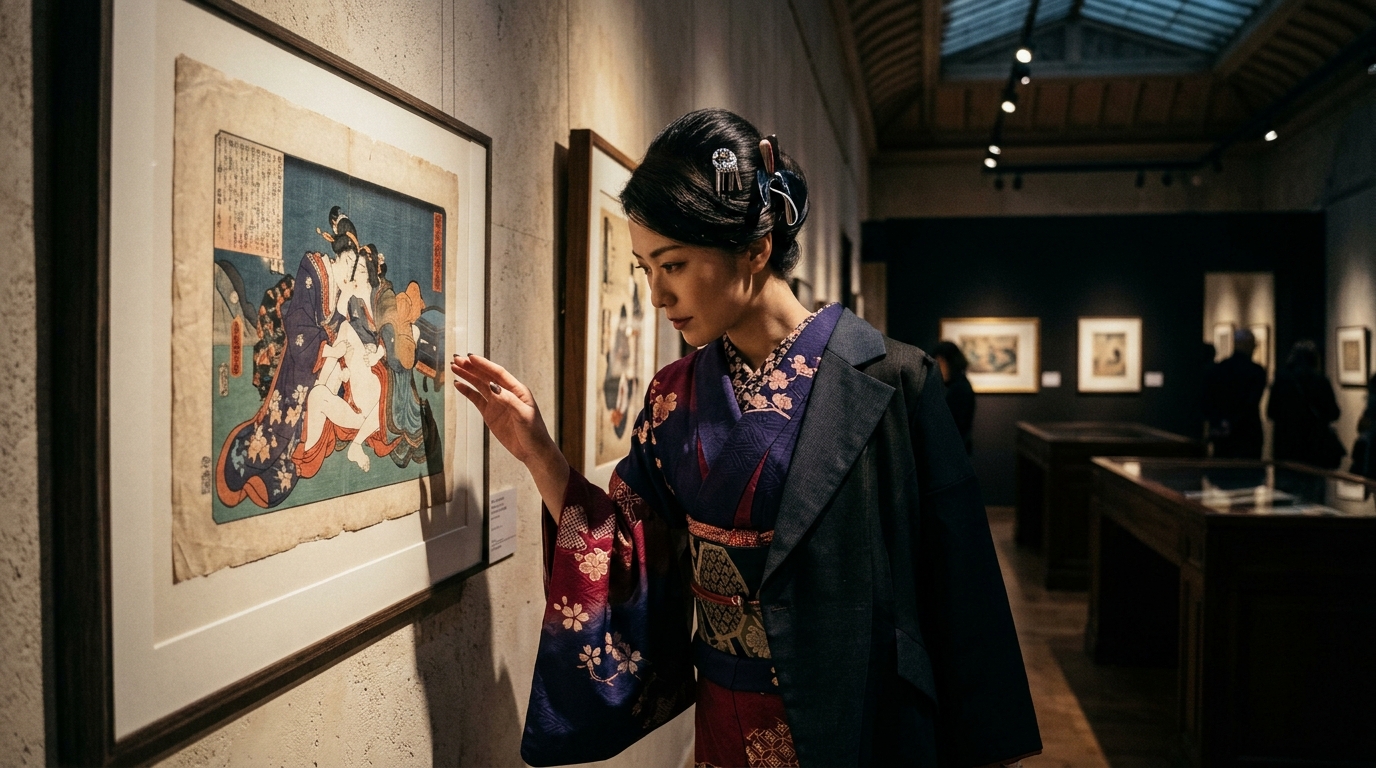
A new exhibition in Paris, “Shunga: Erotic Art of the Edo Period,” is generating significant buzz as it showcases Japanese erotic prints and paintings, offering a unique cultural lens on sexuality and art history. The exhibition runs from November 12, 2026, to February 13, 2027, and is strictly for adults. This curated collection, featuring works from the 17th to the 19th centuries, brings forward a tradition of explicit yet nuanced visual storytelling that often challenges contemporary Western notions of obscenity and artistic intent.
Edo Period Sensibilities
The term “shunga,” literally translating to “spring pictures,” served as more than mere titillation in Edo-period Japan. These woodblock prints and paintings, often produced by masters like Hokusai and Utamaro, were deeply integrated into daily life, serving as wedding gifts, educational tools, and even good luck charms. Far from being hidden away, shunga often depicted a wide array of sexual acts and preferences, rendered with a frankness that surprises many viewers accustomed to more veiled or allegorical representations of sexuality in art. The exaggerated genitalia, a common stylistic choice, wasn’t solely for comedic effect; it often served to emphasize the act itself and the profound human connection inherent in these intimate moments.
The cultural context of shunga also highlights a fascinating divergence from the shame and secrecy often associated with sexuality in other historical periods and regions. In Edo Japan, there was a comparatively open attitude towards sexual expression, where the pursuit of pleasure was not inherently considered sinful or illicit. This isn’t to say there were no social norms, but rather that the artistic representation of sex held a distinct and often celebrated place within the broader cultural landscape. These works frequently captured a sense of playfulness and mutual enjoyment, presenting sexual encounters as a natural, joyful, and often humorous part of human existence.
Anatomy and Artistry
Beyond the explicit subject matter, the artistic merit of shunga is undeniable. The meticulous detail in the robes, the expressive faces, and the dynamic compositions speak to the skill of the ukiyo-e artists who created them. These pieces often illustrate specific sexual positions, sometimes with an almost instructional quality, but always with a keen eye for aesthetic balance and narrative flow. The fluidity of the lines and the vibrant color palettes drew viewers into intimate domestic scenes, bustling pleasure quarters, and fantastical encounters alike.
One might consider how this direct engagement with human anatomy, often depicted with a certain anatomical license, informed a societal understanding of bodies and desire. Unlike some Western art historical traditions that often idealized or allegorized the nude, shunga presented bodies in the act of pleasure, unadorned by classical pretense. This unvarnished approach offers a compelling counterpoint to how we often interpret the representation of sexual compatibility in art and culture today. It’s a reminder that the explicit doesn’t automatically equate to crude; often, it can be deeply sophisticated in its cultural messaging. For more on how art shapes our perceptions of intimacy, see our piece on The Shifting Gaze: How Renaissance Art Reshaped Erotic Idealism.
A Global Conversation
The exhibition’s appearance in Paris now sparks a renewed global conversation about censorship, cultural relativism, and the enduring power of erotic art. In an age where digital platforms often struggle with the nuanced distinction between art and obscenity, shunga provides a rich historical precedent for how sexually explicit imagery can be culturally significant and artistically profound. The debate surrounding its public display, even in a strictly adult-only setting, underscores persistent anxieties about the commodification and interpretation of sexual representation.
The “Shunga: Erotic Art of the Edo Period” exhibition prompts us to consider the ongoing evolution of sexual expression and its place within contemporary society. What does it mean for us to confront such unabashed depictions of sexuality from centuries past? It reveals that while specific social mores change, the fundamental human desire for connection, pleasure, and artistic expression remains constant. This Parisian showcase isn’t just an art exhibit; it’s a cultural mirror, reflecting our own evolving relationship with desire, art, and the intricate dance of human intimacy. It makes one wonder what future generations will make of our own candid explorations of desire, whether in art, literature, or in the increasingly varied ways we approach [Exploring the spectrum of sexual compatibility beyond matching libidos.].
Frequently Asked Questions
What makes shunga art from the Edo period significant beyond mere titillation?
Shunga served diverse cultural roles in Edo Japan, functioning as wedding gifts, educational tools, and good luck charms. They offered a frank, often humorous, depiction of sexual expression, reflecting a comparatively open societal attitude towards pleasure and intimacy during that era.
When and where is the 'Shunga: Erotic Art of the Edo Period' exhibition taking place?
The 'Shunga: Erotic Art of the Edo Period' exhibition is being held in Paris from November 12, 2026, to February 13, 2027. This curated collection showcases Japanese erotic prints and paintings from the 17th to 19th centuries.
How did Edo period shunga art challenge Western notions of obscenity and artistic intent?
Shunga presented explicit sexual acts with a directness and artistic sophistication that often contrasts with Western art's more veiled representations. Its integration into daily life and open cultural acceptance challenges the idea that explicit art is inherently obscene or lacking artistic merit.