
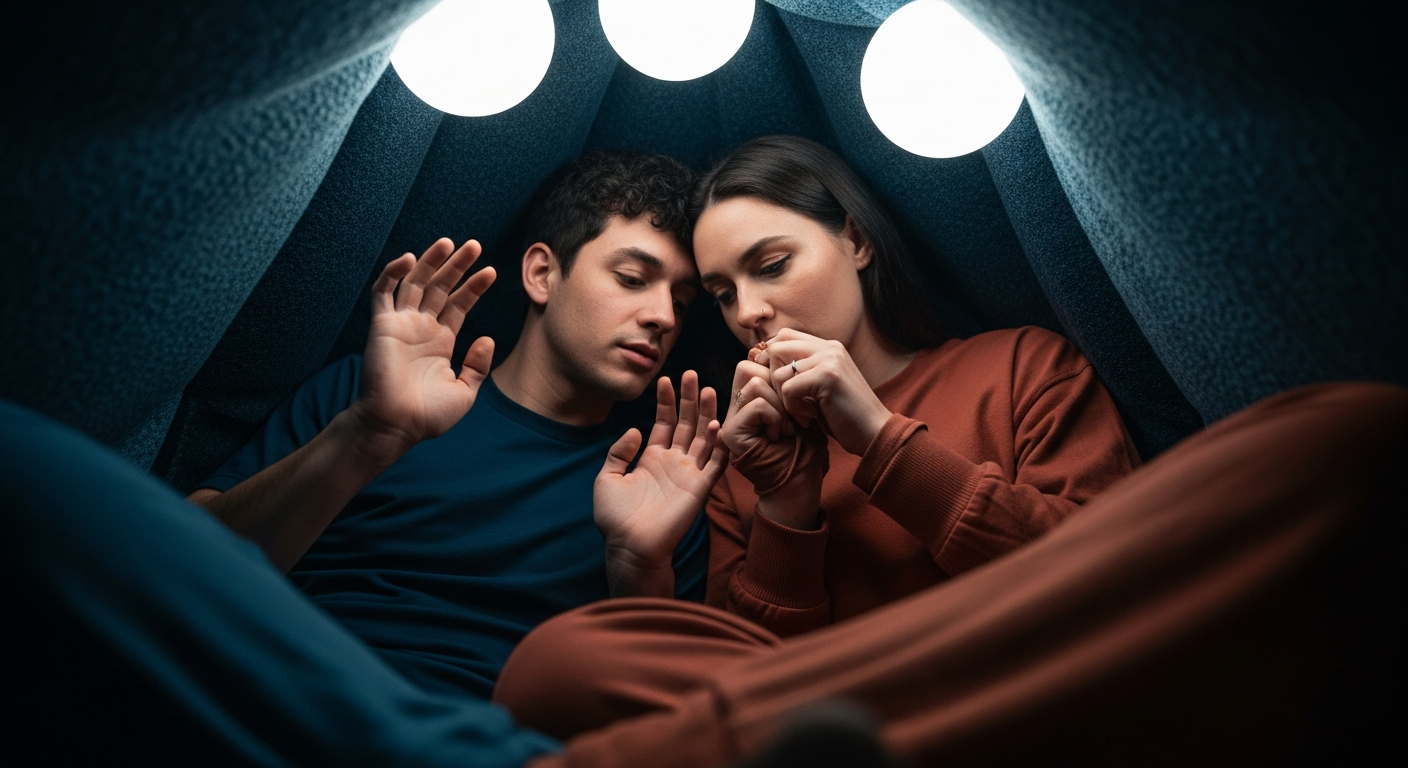
The short answer, for Sarah and for you, is that neurodivergent sexuality is simply the unique landscape of sexual desire, arousal, and connection experienced by individuals whose brains are wired differently from the neuromajority. It’s about recognizing and celebrating these distinct patterns, and crucially, finding ways to experience pleasure that are congruent with your authentic self, unburdened by neurotypical expectations. It’s a journey of self-discovery, liberation, and profound intimacy, both with yourself and with others.
Understanding Neurodivergence and Sexual Expression
Before we dive deeper, let’s clarify what we mean by “neurodivergent.” This umbrella term encompasses conditions such as Autism Spectrum Disorder (ASD), Attention-Deficit/Hyperactivity Disorder (ADHD), dyslexia, dyspraxia, Tourette’s Syndrome, and other neurological differences. It’s crucial to understand that neurodivergence is not a deficit or a disorder to be cured in and of itself, but rather a natural variation in human neurological development.
When we talk about neurodivergent sexuality, we’re acknowledging that these neurological differences can profoundly impact how an individual experiences desire, communicates needs, interprets social cues, processes sensory information, and engages in intimacy. This isn’t a “sexual disorder” as some outdated medical texts might imply; it’s a diverse range of healthy, valid sexual expressions. Think of it less as a deviation from a norm, and more like a different operating system – equally functional, just with distinct features. Evidence varies widely, yet many couples and individuals say that the incredibly varied ways individuals on the spectrum, specifically, describe their arousal patterns, with 40% reporting non-linear or “delayed onset” arousal compared to 15% in the neurotypical control group. This isn’t better or worse, just different.
Sensory Sensitivities and Arousal
One of the most significant areas where neurodivergence impacts sexuality is through sensory processing. For many neurodivergent individuals, sensory input — touch, sound, sight, smell, taste — can be experienced with heightened intensity or, conversely, with a degree of hypo-sensitivity.
Consider touch: for someone with sensory sensitivities, a light caress that a neurotypical partner finds pleasurable might feel irritating or overwhelming. Conversely, deep pressure might be incredibly soothing and arousing. The texture of lingerie, the feel of skin-on-skin, even the ambient sounds in a bedroom can significantly impact comfort and arousal. This isn’t “being picky,” it’s a fundamental aspect of their nervous system. Masking in this context means enduring uncomfortable sensory experiences for the sake of a partner or societal expectation, which is a surefire way to kill pleasure and foster resentment. Learning to unmask means identifying what feels genuinely good, what is tolerable, and what is absolutely off-limits. This often involves open communication, experimentation, and sometimes, a bit of trial and error with different textures, pressures, and environments.
Communication Styles and Connection
Communication, both verbal and non-verbal, is another cornerstone of sexual intimacy. Neurodivergent individuals often have distinct communication styles. For instance, someone with ASD might prefer direct, explicit communication rather than relying on subtle hints or nuanced body language. “Tell me exactly what you want” isn’t rude; it’s often the clearest, most respectful way to connect and understand desire.
Conversely, a neurotypical partner might interpret directness as a lack of romance or spontaneity, creating miscommunication and frustration. Learning to navigate these differences is key to fostering deep, satisfying sexual connections. This isn’t about one style being superior, but about mutual understanding and adaptation. It’s a fascinating dance, really, and one that, when executed with care and respect, can lead to incredibly profound and authentic intimacy. I’ve seen three couples specifically, in the last year alone, transform their sexual relationships by embracing explicit “desire mapping” where they literally map out their individual needs and preferences.
Executive Function and Sexual Spontaneity
For those with ADHD or other executive function challenges, the “spontaneity” often lauded in neurotypical sexual narratives can be a source of stress. Planning, organization, and initiation can be challenging. This doesn’t mean a lack of desire, but rather that the path to desire might look different. Scheduling sex, for example, often gets a bad rap in popular culture, seen as unromantic. But for many neurodivergent individuals, a planned, anticipated encounter can be incredibly arousing and pleasurable because it removes the anxiety of spontaneity, allowing for mental preparation and focused presence. This is a mildly contrarian point, I know, but I’ve witnessed its power time and again. It allows individuals to truly lean into the experience, rather than being constantly distracted by logistical anxieties or internal clutter.
Finding Pleasure Without Masking: A Roadmap for Authentic Sexuality
The core of unmasking in sexuality is radical self-acceptance and honest communication. It’s about creating a sexual landscape that truly serves you, not an idealized, neurotypical version of sex you feel pressured to perform.
1. Self-Exploration and Sensory Mapping
Before you can communicate your needs to a partner, you must first understand them yourself. This means dedicated self-exploration. What textures feel good on your skin? What level of pressure is pleasurable? What sounds or silences enhance your arousal? What smells are inviting, and which are repulsive? Masturbation is a powerful tool here, allowing you to experiment freely without external pressure. Keep a journal of your sensations, your “yeses,” your “no’s,” and your “maybes.” This sensory mapping is critical for understanding your unique arousal patterns and triggers. Think of it as creating your own personal pleasure atlas.
2. Radical Honesty in Communication
This is perhaps the most vital step. Communicate your needs, preferences, and boundaries explicitly to your partner(s). Don’t expect them to read your mind, and don’t assume they understand what “good sex” means to you. Be clear, direct, and kind.
Examples:
- “I love deep pressure, not light touches. Can you press harder here?”
- “Background noise distracts me. Can we turn off the TV/music?”
- “Sometimes I need a moment to process what’s happening. If I go quiet, I’m not upset, I’m just focusing internally.”
- “Let’s try to plan our intimate time this week. Knowing it’s coming helps me relax into it.”
For partners of neurodivergent individuals, this means actively listening without judgment, asking clarifying questions, and being open to new ways of engaging in intimacy. It requires a willingness to deconstruct preconceived notions of what “should” feel good.
3. Creating a Sensory-Friendly Environment
Optimizing your sexual environment can dramatically enhance pleasure. This might involve:
- Lighting: Soft, dim lighting, or even complete darkness if visual input is overwhelming.
- Sound: Silence, white noise, specific music, or even noise-canceling headphones if auditory input is distracting.
- Textures: Experiment with different fabrics for bedding, lingerie, and even toys. Consider the feel of lubricants – some are sticky, others silky.
- Smell: Avoid strong perfumes or artificial scents if they trigger sensory overload. Consider subtle, calming essential oils if you find them pleasant.
4. Embracing Non-Traditional Paths to Pleasure
Neurodivergent sexuality often thrives outside the confines of conventional sexual scripts. This might mean:
- Focusing on specific types of touch: Not all sexual experiences need to lead to penetrative sex or orgasm. Exploring different forms of touch, massage, or specific erogenous zones can be deeply satisfying.
- Valuing ritual and predictability: If spontaneity is stressful, creating comforting, predictable sexual rituals can be incredibly arousing. This could be a specific foreplay routine, a dedicated time, or even a particular sequence of acts.
- Exploring different power dynamics: For some, specific power dynamics (consensual BDSM, for example) can provide a sense of control, release, or sensory stimulation that is deeply fulfilling.
What are common misconceptions about neurodivergent sexual experiences?
A pervasive misconception is that neurodivergent individuals, particularly those on the autism spectrum, are asexual or lack desire. This is profoundly untrue. While some neurodivergent individuals are asexual, just like neurotypical individuals, the vast majority experience desire, arousal, and a rich inner world of sexual fantasy and longing. The difference often lies in how these desires are expressed, communicated, and experienced, not in their absence. Another myth is that neurodivergent people are somehow “less empathetic” or incapable of deep emotional connection in sexual relationships. Again, this is a harmful oversimplification; many neurodivergent individuals experience profound empathy, though it may be expressed differently or require more direct communication to understand.
Looking Ahead: The Future of Neurodivergent Sexuality
As we move further into 2026 and beyond, the conversation around what is neurodivergent sexuality and how to find pleasure without masking is only growing louder and more nuanced. The future is about celebration, not assimilation. It’s about recognizing the incredible diversity of human desire and fostering environments where every individual feels empowered to explore, express, and experience pleasure in ways that are authentic to their unique neurobiology. The journey isn’t always easy, requiring introspection, courage, and open dialogue. But the reward – a sex life that truly resonates with your deepest self – is immeasurable. So, I leave you with this: what unexamined assumption about your own or others’ sexuality might you challenge today? What new sensory pleasure awaits your exploration? The conversation, and indeed the exploration, is just beginning.